Łukasiewicz – Institute of Aviation is now ready to conduct research on air‑breathing rotating detonation engines (airbreathing RDE) with a sevenfold increase in airflow rate. Polish researchers can already carry out commercial research aimed at improving combustion efficiency.
The newly commissioned test facility will enable research on significantly larger flow engines than before, meeting the conditions necessary for initiating and sustaining the detonation process in air‑breathing RDE engines on a larger scale.
“This is a key step toward Łukasiewicz – ILOT carrying out tests of an air‑breathing rotating detonation engine. Detonation technology assumes the possibility of a substantial—up to six‑fold—reduction in propulsion system size, while simultaneously increasing efficiency by even more than a dozen percent compared with conventional ramjet engines. This translates into the potential to reduce weight and increase the range of aircraft,” said Dr. Eng. Michał Kawalec, Senior Research Specialist at Łukasiewicz – ILOT.
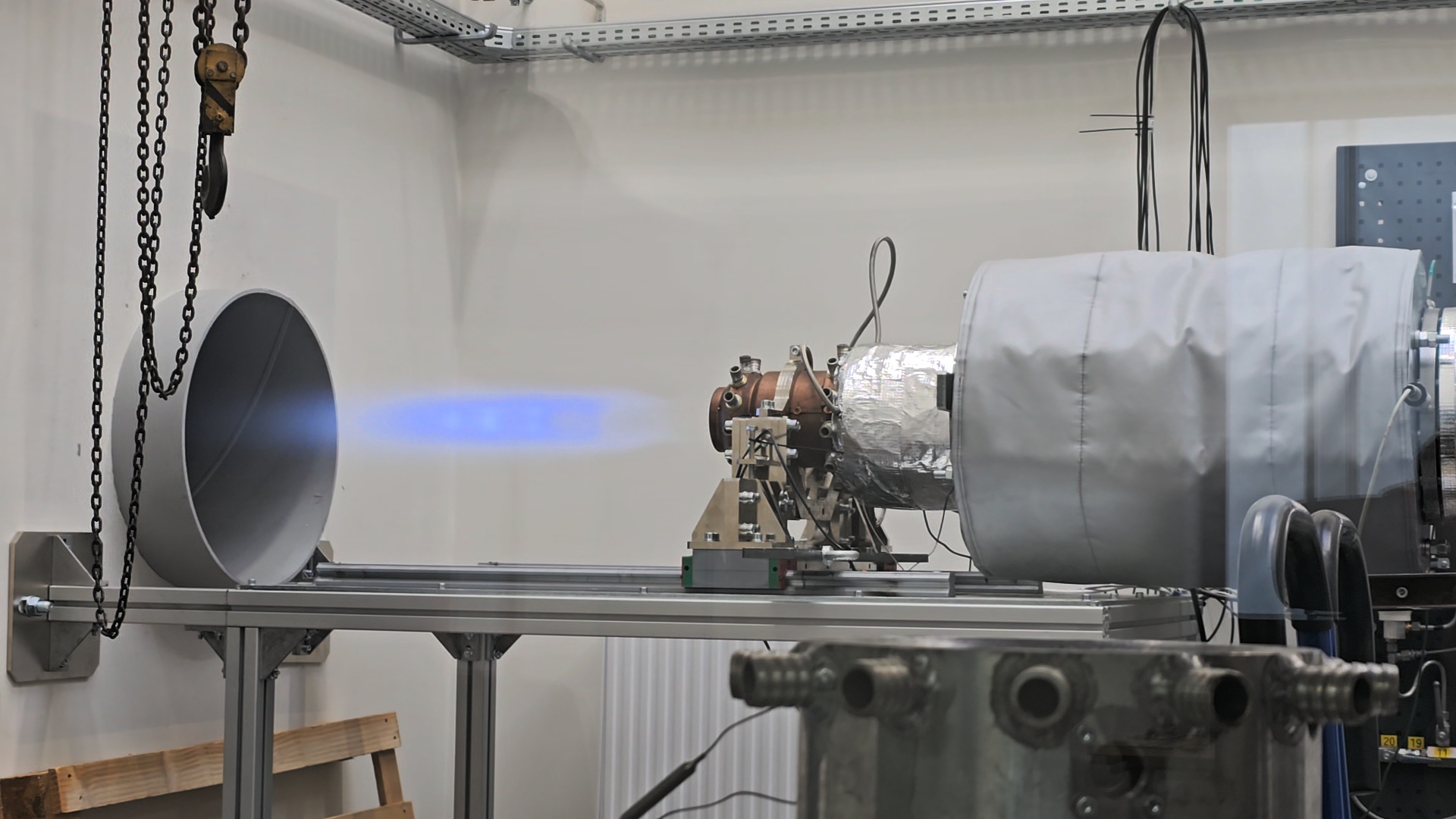
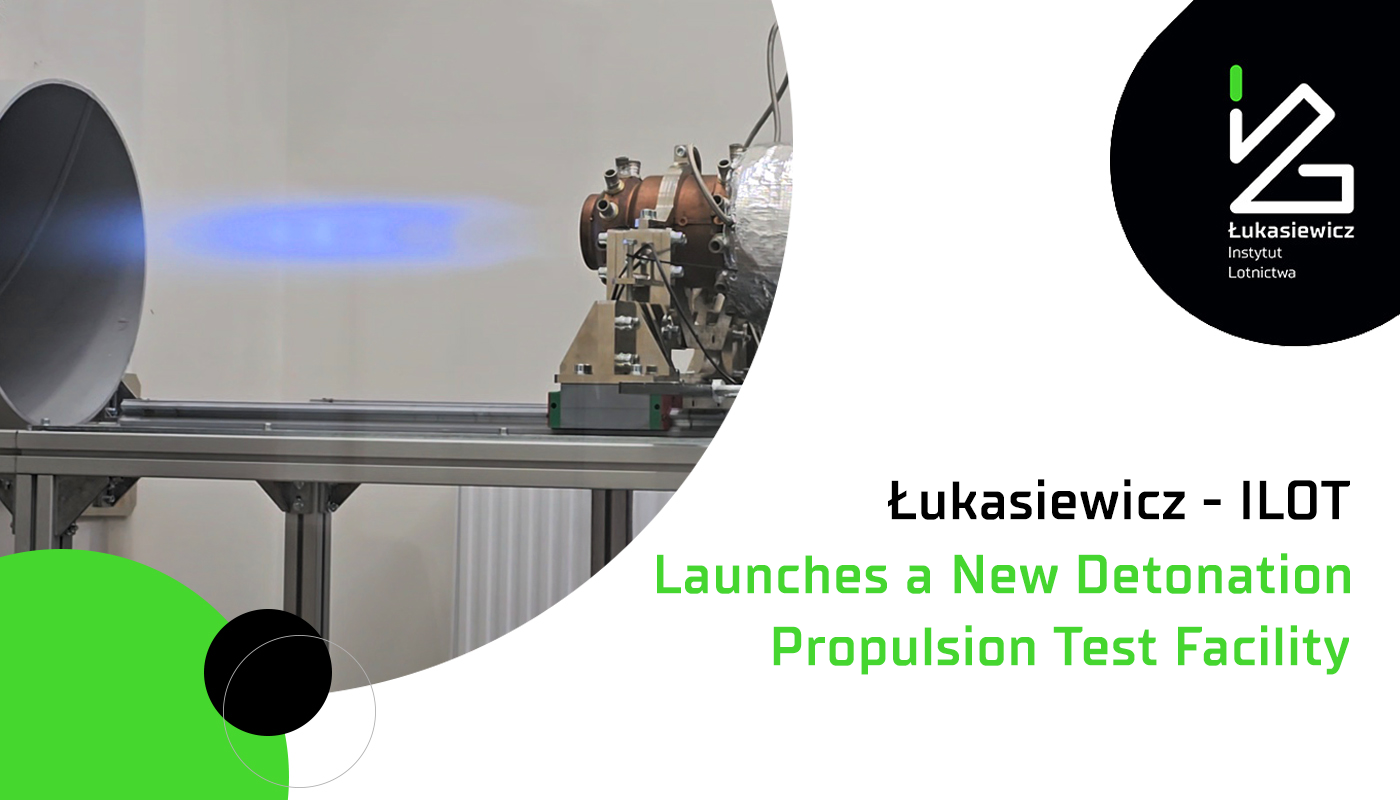
The full operational readiness of the new test facility was confirmed by a series of successful start‑ups of a ramjet engine equipped with a detonation combustion chamber. These tests demonstrate that the research infrastructure is ready to safely conduct studies on detonation propulsion systems intended, among other applications, for rockets—especially hypersonic ones—and for high‑speed aerospace propulsion.
Detonation propulsion test facility – what makes it stand out?
At the facilities within the Łukasiewicz – ILOT test stand, it is possible to controllably reproduce flight parameters for air‑breathing RDE propulsion systems and to perform comprehensive measurements of key operating parameters of RDE engines. What does this mean in practice?
“The new test stand, thanks to its enhanced parameters, enables research on air‑breathing RDE propulsion systems at a higher TRL, which is crucial for the global development of this technology. Our system allows us to collect propulsion performance characteristics and verify its capabilities in the context of applications in next‑generation propulsion systems for orbital operations and satellite propulsion, defense applications—missiles, rockets, hypersonic flight—as well as suborbital flights and lander operations. Combined with the comprehensive competencies at Łukasiewicz – ILOT, we are able to fully develop a new type of propulsion system—from concept, through analysis, modeling, manufacturing, and material testing, to engine testing and implementation,” explains Anna Piorun, Head of the Detonation Propulsion Testing Section at Łukasiewicz – ILOT.
At the test facility, Polish scientists will be able to carry out:
- experimental research on air‑breathing rotating detonation engines (airbreathing RDE) with thrust up to 5 kN,
- experimental research on rocket rotating detonation engines (RDE) with thrust in the range of 10–500 N,
- experimental studies of fundamental detonation parameters,
- visual studies of RDE engine injection systems,
- heat transfer research along with the development of cooling systems.
The construction of the new RDE propulsion research facility responds both to global market demand and the growing technological race to verify the potential of this technology, as well as to the significant achievements of the Łukasiewicz – ILOT team in this field to date. The center has already recorded notable successes in the design and testing of rotating detonation engines—air‑breathing, turbine‑based, and rocket engines using gaseous and liquid propellants. The most significant achievement is the world’s first demonstration flight of a rocket powered exclusively by a rocket RDE fueled with liquid propellants.