The engineering team at Łukasiewicz – ILOT has successfully completed an advanced test campaign of engines designed for propulsion modules of satellite platforms. The tests were carried out at the vacuum rocket engine test facility under conditions reproducing the space environment. The scope of the research included analysis of operational stability, thrust measurements, and detailed characterization of key operational parameters such as pressure and temperature. The obtained results confirmed the reliability and technological maturity of the developed propulsion systems.
Precise measurements of key parameters such as thrust, pressure, and operating time form the basis for optimization as well as for the assessment of structural integrity and reliability of rocket propulsion systems, which directly affect the safety and success of space missions. The test campaign conducted by the Łukasiewicz – ILOT team included both qualification testing of a prototype engine and acceptance tests of three flight-model engines, representing a significant step toward the deployment of the solution for orbital applications.
“The test program was designed to enable a comprehensive assessment of engine performance across a wide range of operational conditions. It included both cold‑start and hot‑start tests, conducted at various propellant feed pressures and for different operating times — from short impulses of approximately 20 ms up to long‑duration firings lasting as long as 2 hours of continuous operation. Such a broad scope of testing allowed for a detailed characterization of system dynamics and its behavior under conditions corresponding to real mission profiles,” said Michał Zieliński, Head of the Vacuum Propulsion Testing Section at Łukasiewicz – Institute of Aviation.
The research conducted by engineers at Łukasiewicz – ILOT thus confirmed the high level of technological readiness of the solution, opening the way for its use in future space missions.
Łukasiewicz – ILOT Vacuum Test Facility
“The test facility enables testing of engines with thrust levels of up to 500 N and allows research to be conducted at pressures below 2 mbar in a specially designed vacuum chamber. The infrastructure also makes it possible to perform continuous tests lasting up to 2 hours, which is a unique capability on the international stage. Such a test has already been successfully carried out, confirming the long‑term performance and reliability of the vacuum and cooling systems,” said Michał Zieliński, Head of the Vacuum Propulsion Testing Section at Łukasiewicz – Institute of Aviation.
Scope of Research at the Space Propulsion Test Facility:
- qualification testing of space propulsion systems with thrust ranging from 0.25 to 500 N, using non toxic propellants,
- qualification testing of complete propulsion systems with thrust up to 500 N,
- development testing at higher technology readiness levels (TRL 6–9),
- capability to conduct tests lasting up to 2 hours of continuous operation (for engines with 500 N thrust).
Over 1,000 Propulsion Unit Tests
The success of the test facility is driven by an experienced team of Łukasiewicz – ILOT engineers responsible for system integration, execution of test campaigns, and development of testing procedures. Their expertise and commitment allow the full potential of the facility to be utilized, ensuring the highest standards of quality and safety in conducted research. This, in turn, accelerates preparations for space missions and strengthens national technological independence.
To date, more than 1,000 firings of various propulsion units have been conducted at the Łukasiewicz – ILOT test facility, making it one of the most active propulsion testing centers of this type in Poland.
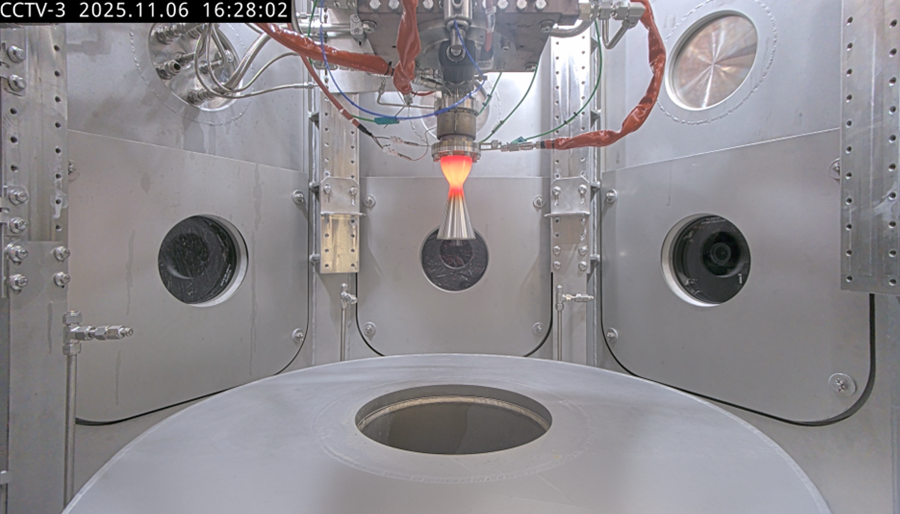
During commissioning and verification activities of the vacuum test facility, a test campaign was carried out using a rocket engine powered by HTP (High‑Test Peroxide) to confirm the facility’s readiness for testing objects with a gas load close to the design point of the infrastructure. For this campaign, an engineering model of the GRACE engine in its monopropellant configuration was selected, equipped with a nozzle designed for vacuum operation. The engine was developed as part of the GRACE 2 project for the pre‑qualification of a high‑performance catalyst for the decomposition of 98% HTP. During the firings, stable operation of the pumping system and maintenance of altitude‑simulated conditions were confirmed, validating the readiness of the test facility to provide testing services for satellite engines with thrust levels of up to 500 N.
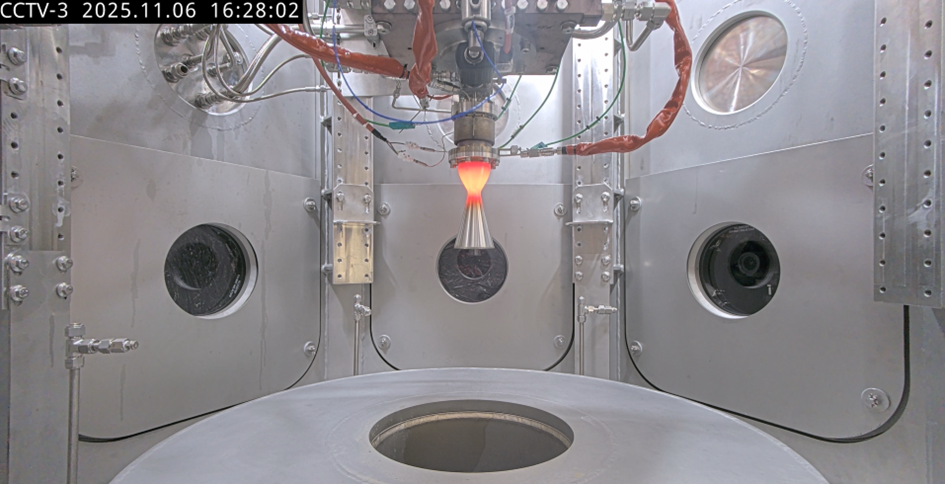
Figure 1. Footage from Monopropellant GRACE tests.
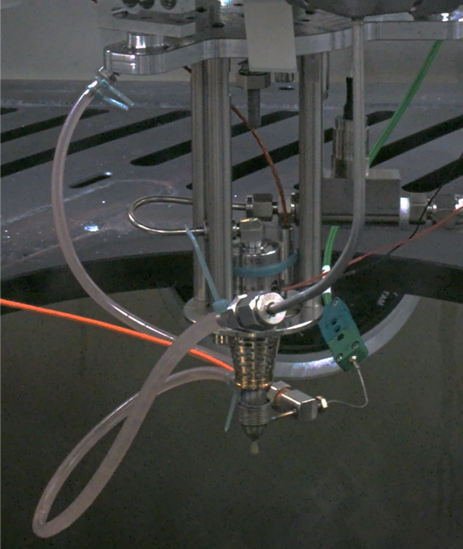
Figure 2. ILT-1 engine before the test
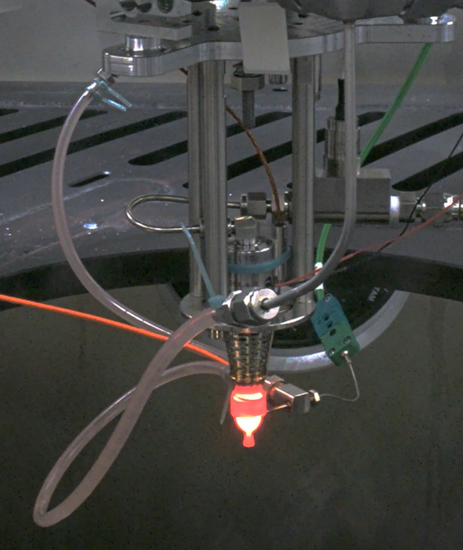
Figure 3. ILT-1 engine during the test